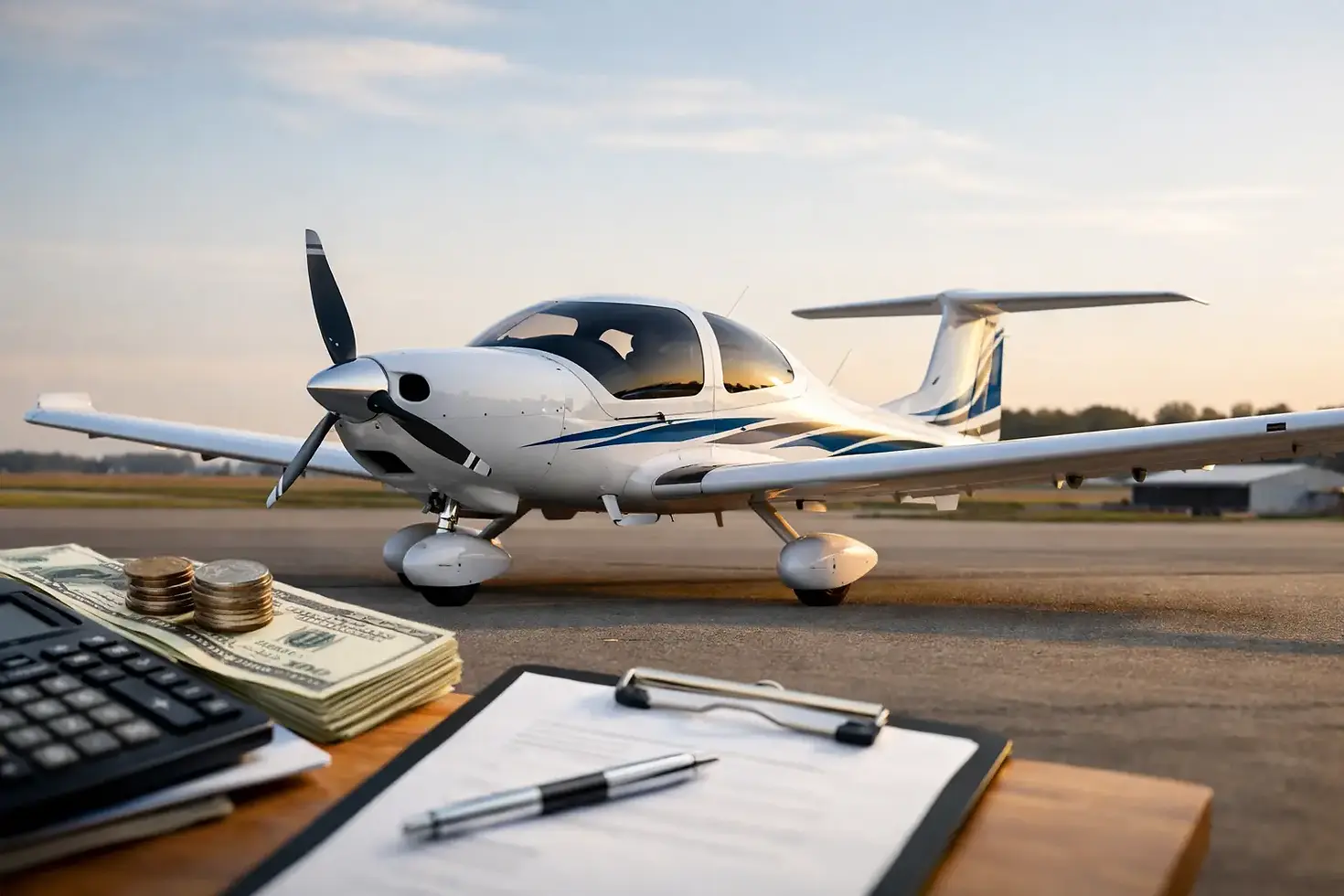
Diamond DA40 Cost Per Hour Explained
- Matt Downs
- Jun 3
- 6 min read

If you are pricing out training or rental options, diamond da40 cost per hour is the number that quickly turns a nice-looking airplane into a real budget decision. And with the DA40, that number is usually more nuanced than a simple wet rate on a scheduling page. Fuel burn, avionics, maintenance standards, utilization, insurance, and how the airplane is operated all shape what you actually pay - and what you get in return.
For many pilots, the DA40 sits in an interesting middle ground. It is more refined than the aging trainer fleet that still dominates many ramps, but it is not a luxury airplane masquerading as a trainer. It is a practical, modern platform with real efficiency advantages, especially for students, instrument pilots, and renters who value dispatch reliability and glass-cockpit familiarity.
What the diamond da40 cost per hour really includes
When people ask about hourly cost, they are often mixing together two different ideas. One is the operator's true cost to own and run the aircraft. The other is the renter or student pilot's billable hourly rate. Those numbers overlap, but they are not the same.
On the ownership and operating side, the DA40's hourly cost includes fuel, oil, routine maintenance, engine reserves, propeller reserves, inspections, tires and brakes, insurance, hangar or tiedown costs, avionics upkeep, and the inevitable unscheduled maintenance that comes with any active aircraft. If the airplane is financed, capital cost matters too. If it is in a leaseback fleet, utilization changes the math again.
On the customer side, the hourly number is usually framed as a wet rental rate, meaning fuel is included. For flight training, instruction is often billed separately unless it is part of a bundled or finishing program. That distinction matters. A DA40 can look expensive next to an older trainer on paper, then become surprisingly competitive once you factor in dispatch consistency, lower cancellations, faster avionics learning, and less time spent adapting to outdated systems.
Typical DA40 hourly cost ranges
A fair answer for diamond da40 cost per hour is that it depends on whether you mean direct operating cost or rental cost.
For direct operating cost, many owners and operators will see a number that lands roughly in the low hundreds per flight hour once fuel, reserves, maintenance, and routine wear items are properly accounted for. Depending on engine variant, local fuel prices, insurance profile, annual utilization, and maintenance philosophy, that can swing meaningfully.
For rental and training, rates are often higher than bare operating cost because the operator has to cover fixed overhead, fleet management, cleaning, scheduling systems, downtime, administrative work, and capital recovery. In many US markets, a modern glass-panel DA40 will typically rent at a premium over legacy trainers such as older Cessna 172s or Piper Warriors, but not always by as much as pilots expect.
That difference exists for a reason. A newer, well-maintained aircraft with standardized avionics and in-house support is not just selling an airframe by the hour. It is selling predictability. For a student trying to stay on pace or a rated pilot planning a personal trip, that matters.
Fuel burn is one of the biggest variables
The DA40 has built much of its reputation on efficiency. Depending on the specific model and how it is leaned and operated, fuel burn often lands in a range that compares favorably with many traditional four-seat trainers. That is a major reason the airplane remains attractive as both a training platform and a personal travel machine.
But fuel economy is not the whole story. The pilot who flies short local lessons with frequent climbs, pattern work, and touch-and-goes will see a different cost profile than the pilot who flies a well-managed cross-country at stable cruise power. Training flights are rarely the cheapest way to operate any airplane. They are hard on brakes, tires, and engine cycles, and they often spend more time at lower efficiency settings.
So when someone quotes a DA40 fuel burn number, it helps to ask what kind of flying they mean. Pattern work, instrument training, and regional travel can all produce different hourly realities.
Maintenance quality changes the value equation
This is where hourly cost gets misunderstood. Two DA40s can have similar published rates and deliver very different ownership or rental experiences.
A fleet supported by experienced maintenance personnel, especially people familiar with composite aircraft and Diamond-specific issues, tends to protect value in ways pilots notice quickly. Better dispatch reliability means fewer canceled lessons. Better avionics upkeep means less troubleshooting time. Better preventive maintenance often reduces the hidden cost of training delays and schedule disruptions.
That is especially relevant for composite aircraft. The DA40 is not difficult to operate, but it benefits from knowledgeable care. When maintenance is treated as an afterthought, hourly cost may look lower right up until availability slips or small issues become expensive ones.
For pilots, the practical question is not just, "What is the posted rate?" It is, "How often is the airplane actually ready to fly when I am?" A slightly higher hourly rate can be the cheaper path if it keeps training momentum intact.
Why the DA40 often makes sense for training
The DA40 is not simply a prettier trainer. It supports a training environment that feels current. Garmin glass avionics, stable handling, good visibility, and a cockpit that encourages disciplined systems management all contribute to better carryover for many pilots, especially those planning instrument work or future flying in technically advanced aircraft.
That affects cost in subtle ways. A student learning from day one in a modern panel may spend less time later relearning habits or bridging the gap to more advanced avionics. A returning pilot may regain confidence faster in an aircraft that offers strong situational awareness. A renter planning Pacific Northwest trips may place real value on weather tools, cockpit familiarity, and efficient cruise performance.
None of that means the DA40 is automatically the cheapest option on a spreadsheet. It means hourly cost should be judged alongside training efficiency and aircraft capability.
Cost per hour versus cost per certificate
This is one of the most useful ways to think about the DA40. An airplane with a lower advertised rate is not necessarily the lower-cost path to a private, instrument, or proficiency goal.
If a modern, standardized aircraft helps you train more consistently, reduces downtime, shortens checkout friction, and keeps your lessons focused on skill-building rather than workarounds, your total spend can become more competitive than the hourly rate alone suggests. That is why packaged finishing programs can make sense for some pilots. When aircraft rental, instruction, and examination costs are organized into one structure, budgeting becomes clearer and progress often becomes more disciplined.
For career-minded students, there is another layer. Time in a glass-cockpit airplane has practical relevance. Even when the cost per hour is a bit higher, the training environment may align better with long-term goals.
What pilots should ask before comparing rates
A smart comparison starts with a few grounded questions. Is the rate wet or dry? Are instruction, membership, checkout, or fuel surcharges separate? What avionics package is installed? How often are aircraft unavailable due to maintenance? Is support in place for composite airframes and modern systems? Is the fleet standardized or do you have to adapt between aircraft?
Those details tell you far more than the number alone. A low posted rate loses its appeal fast if you are repeatedly bumped by downtime or forced into inconsistent training across mismatched airplanes.
In a market where many pilots are choosing between older legacy trainers and newer aircraft, the DA40 often earns its premium through consistency. That is especially true for pilots who care about training flow, equipment quality, and confidence in the machine they are flying.
So, is the DA40 worth the hourly cost?
For many pilots, yes - if the airplane is operated well.
The DA40 tends to justify its hourly cost when it is part of a reliable, professionally maintained environment with strong avionics, clean fleet standards, and scheduling that supports actual progress. In that setting, you are not just paying for fuel and Hobbs time. You are paying for a smoother path through training, better preparedness for modern flying, and an aircraft that feels designed for the way many pilots want to fly now.
At a place like Prop Culture Aviation, that value proposition is especially clear because the airplane is not treated as a novelty. It is the training platform. That matters for students, for renters, and for owners evaluating where a modern aircraft fits into a structured operating environment.
If you are evaluating diamond da40 cost per hour, the best move is to look one layer deeper than the sticker price. Ask what kind of flying experience that hourly number is buying - because in aviation, the cheapest rate and the best value are often two very different things.


Comments